
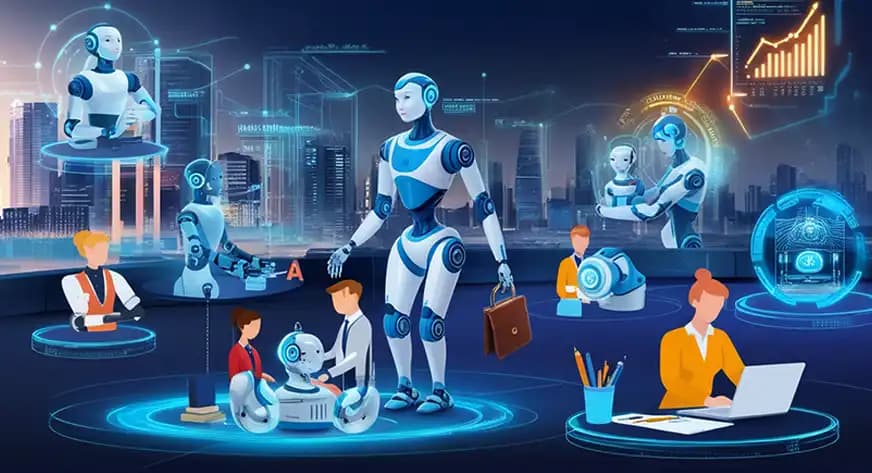
Smart Automation’s New Face
Although AI is everywhere these days, we’re entering a new chapter—one that goes far beyond chatbots or virtual assistants. This next wave is being driven by something called agentic AI.
If news headlines about “AI agents” or “multi-agent systems” have caught your eye, you’re not alone. These terms are taking over tech conversations. But what exactly are AI agents—and why is everyone so excited about them?
To put it simply, agentic AI refers to digital programs—think of them as clever helpers—that can sense, decide, and act. They don’t sit around waiting for instructions. They take initiative, sometimes independently, sometimes as part of a team.
This leap in autonomy signals a big transformation in smart automation—one that could reshape how we live, work, and shop.
What Are AI Agents?
At its core, an AI agent is intelligent software with initiative. Imagine a digital teammate who doesn’t need micromanaging.
Give it a goal, and it figures out the steps to get there—observing its environment, adapting, and even learning along the way. This isn’t science fiction. It’s happening now, thanks to machine learning, big data, and stronger computing power.
What makes agentic AI different from older bots is autonomy. Traditional automation followed strict rules. Today’s AI agents, by contrast, respond to context and learn from experience.
Everyday Examples: AI Agents in Action
AI agents are already woven into our routines:
- Voice assistants like Siri and Google Assistant can now control smart homes, give commute updates, and schedule reminders proactively.
- Email platforms highlight key messages, filter distractions, and suggest responses automatically.
- Smart thermostats adjust temperature based on patterns and preferences.
- Website chatbots handle FAQs or account changes without involving a human.
These agents often work silently in the background, optimizing everyday tasks without fanfare.
Meet the Team: What Are Multi-Agent Systems?
When one agent isn’t enough, enter multi-agent systems—a group of AI agents working together. Each has a role, but they collaborate to solve bigger challenges. Here’s how:
| Scenario | How Multi-Agent Systems Work |
|---|---|
| Delivery fleets | Each vehicle plans its route but coordinates with others to avoid traffic and share updates. |
| Smart power grids | AI agents control energy flow, monitor usage, and respond to outages in real time. |
| Warehouse automation | Robots pick, pack, and communicate their tasks and locations to prevent collisions. |
| Disaster response | Agents gather and share data from drones, weather tools, and emergency responders for fast action. |
Why Is Agentic AI Changing Smart Automation?
Agentic AI goes beyond repeating tasks. It takes on entire workflows—managing schedules, monitoring systems, optimizing operations, and even making decisions.
These agents learn and adapt, improving over time. Businesses across industries are deploying them:
- Hospitals use them to handle appointments and patient records.
- Banks rely on them to detect fraud in real time.
- Retailers personalize shopping experiences using agent-driven analytics.
The outcome? More efficiency, better accuracy, and less human effort.
What Does the Future of AI Automation Look Like?
Experts foresee a future where AI agents manage projects, make decisions, and even negotiate on our behalf. Imagine:
- Global disaster response teams powered by hundreds of coordinated agents.
- Supply chains that self-correct in real time.
- Smart cities that balance energy use, traffic flow, and public safety through multi-agent systems.
These aren’t pipe dreams—they’re on the horizon, and some are already in motion.
Are There Risks to Agentic AI?
Yes, like any powerful tool, agentic AI brings challenges:
- Privacy: Agents need data to operate, raising concerns about data collection and use.
- Bias: If agents are trained on flawed data, they can reinforce or even worsen inequalities.
- Accountability: Who’s responsible if an autonomous agent makes a bad decision?
Researchers and regulators are actively working to address these concerns by promoting transparency, ethical design, and human oversight.
Distilled
AI agents aren’t just the next tech fad—they’re powerful digital collaborators. By sensing, deciding, and acting (often as a team), they’re helping usher in a new era of smart automation.
From improving your inbox to optimizing global logistics, their potential is massive. As they become more common, expect them to quietly handle the complexities of modern life—making everything just a bit simpler and more efficient.
The future is agentic, and it’s arriving faster than we think.