
How AI and Automation Are Cultivating the Future of Agriculture and Beyond
The agriculture industry has long been a hub of innovation, with farmers historically serving as data scientists in their own right—tracking weather, soil quality, seed performance, and yields to make smarter decisions each season. Yet, despite this ingenuity, agriculture has not always been viewed as a leader in digital transformation.
That perception is rapidly changing. The integration of artificial intelligence (AI) and automation in farming is setting a powerful precedent for how other industries can transform their operations. The same smart technologies revolutionizing modern farming—like AI-powered sensors, autonomous tractors, and deep learning models—offer immense potential for businesses looking to cut costs, improve precision, and reduce resource consumption.
Modern Farming: Precision Meets Performance
Farming is both an exercise in precision and endurance. With the average American farm spanning over 464 acres—and many significantly larger—every inch of land matters. Add in unpredictable weather and increasing demand for food production, and it’s clear why technology is becoming essential to modern agriculture.
To address these challenges, farmers are embracing tools such as AI-enabled sensors, stereo cameras, lidar, radar, and machine learning to automate repetitive, labor-intensive tasks. These technologies are reshaping crop production from planting to harvesting—boosting efficiency, sustainability, and accuracy.
Planting with Autonomous Precision
One of the most transformative developments is the rise of autonomous tractors. Using AI and deep neural networks, these machines perform tillage—soil preparation for planting—without a driver. Real-time sensors guide the machinery with centimeter-level accuracy, adjusting depth and positioning to account for changing field conditions.
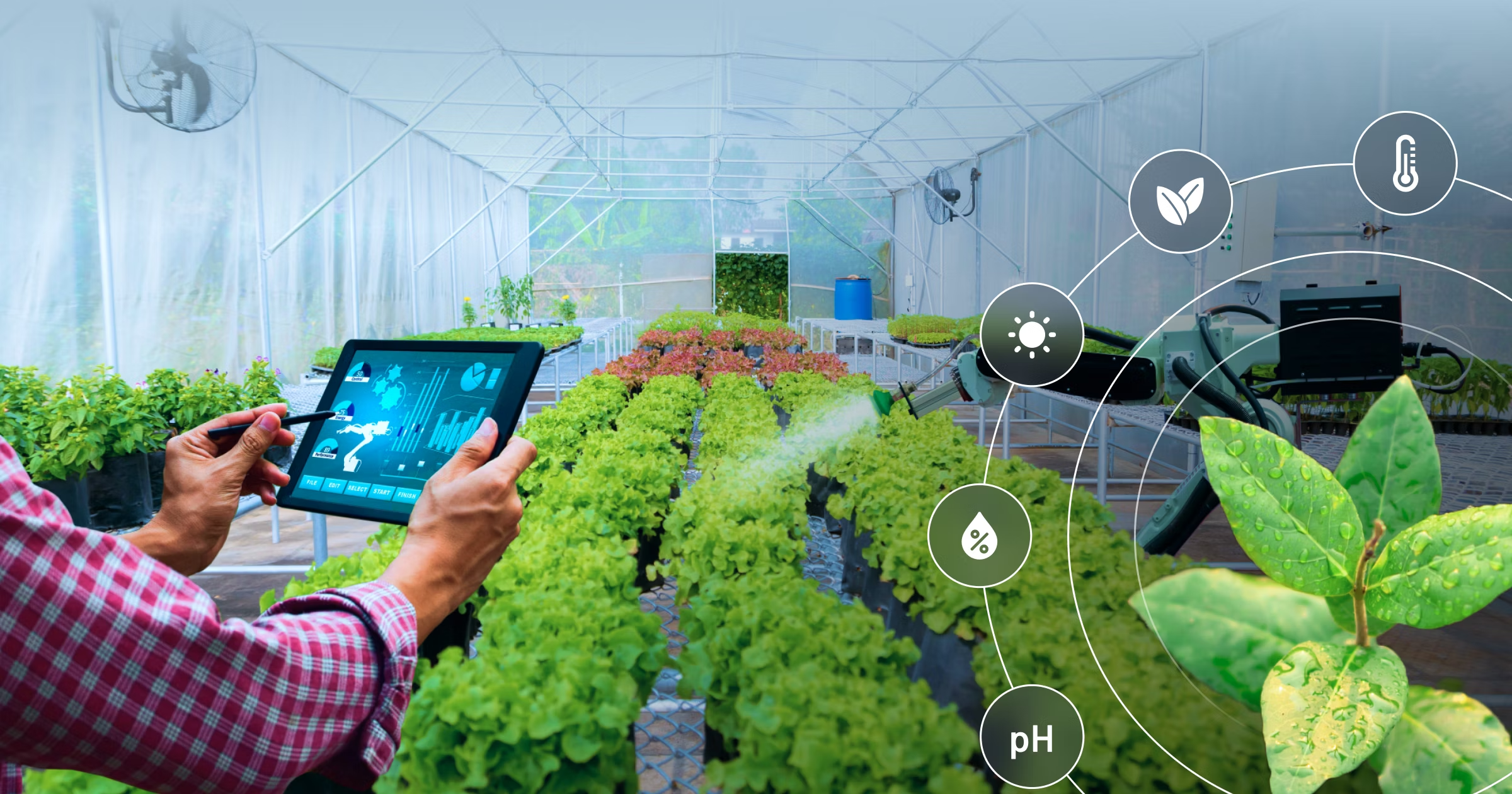
Farmers now monitor the entire operation remotely via tablets, receiving real-time data to fine-tune performance on the fly. This approach conserves fuel, reduces environmental impact, and minimizes the need for highly skilled labor.
Smart Spraying and Weeding
After planting, AI-driven computer vision systems take over. These tools differentiate between crops and weeds, recognize growth stages, and assess plant health. Connected to precision sprayers and spreaders, they determine and apply the optimal amount of nutrients or pesticides—down to the individual plant level.
By eliminating blanket applications, this system reduces waste, prevents overuse of chemicals, and ensures each plant receives tailored care for maximum yield.
Harvest Optimization with AI
During harvest, smart combine harvesters use high-resolution cameras and deep learning models to analyze grain quality in real time. They adjust threshing speed, moisture extraction, and grain separation autonomously to maximize output quality.
Millions of micro-decisions are made every second, minimizing loss and maximizing the cleanliness and yield of each crop. Farmers receive live updates to optimize performance further, allowing them to focus on strategic tasks rather than manual oversight.
Beyond the Field: Lessons for Other Industries
AI and automation aren’t just transforming agriculture—they offer blueprints for every industry plagued by repetitive, labor-intensive tasks. From manufacturing to logistics, agentic AI (AI that makes decisions independently) can be leveraged to streamline operations, reduce overhead, and increase productivity.
Industries can take a page from modern farming, applying AI to:
- Automate quality control processes
- Predict maintenance needs before equipment failures
- Optimize inventory based on real-time demand signals
- Handle routine administrative or operational tasks autonomously
Agentic AI acts as a digital teammate—handling tasks without constant oversight, reducing error, and freeing up human workers for strategic, empathetic, or creative work that machines can’t replicate.
The Future Is Already Sowing Results
AI and autonomous technologies are no longer optional—they are becoming fundamental. In agriculture, they are solving age-old problems with modern precision. In other sectors, these same tools can eliminate inefficiencies and open the door to smarter, more resilient operations.
As AI continues to evolve, it’s not about whether industries will adopt it—but how they will deploy it to reap the most value.
Explore more about AI, automation, and emerging tech innovations at ITech360hub.