
Ping Identity Defines the Runtime Identity Standard for Autonomous AI
Cyber Security / Identity Theft | 5 min read
Ping Identity, a leader in securing digital identities for the world's largest enterprises, has announced the General Availability of Identity for AI — a solution designed for the realities of autonomous AI agents operating at enterprise scale. As agents move into production, the challenge is no longer simply managing identity. It is controlling what those identities do as they operate at runtime. In an agentic enterprise, the system of record is not sufficient — the system that enforces decisions at the moment of action becomes the system of control.
"AI agents are not features. They are actors in the enterprise that require identity, authority, and accountability. Identity is foundational. Agents acting autonomously at agentic scale and speed against systems of record will require continuous verification and enforcement at every decision."
— Andre Durand, CEO and Founder, Ping Identity
Why Traditional Identity Is No Longer Enough
Traditional identity frameworks were built for authentication and access at login — granting permissions once and assuming the session that follows is safe. Autonomous agents fundamentally break that model. Every action an agent takes carries enterprise impact. Managing identities still matters, but it is no longer sufficient when agents can operate continuously, act across multiple systems, and execute decisions at machine speed without human intervention at each step.
The shift demands explicit delegation, not impersonation. Rather than extending human credentials to AI systems, organisations must define and enforce what an agent is permitted to do through continuous, contextual authorisation — with humans remaining accountable and retaining approval authority where appropriate.
Three Core Components: Agent IAM Core, Agent Gateway, and Agent Detection
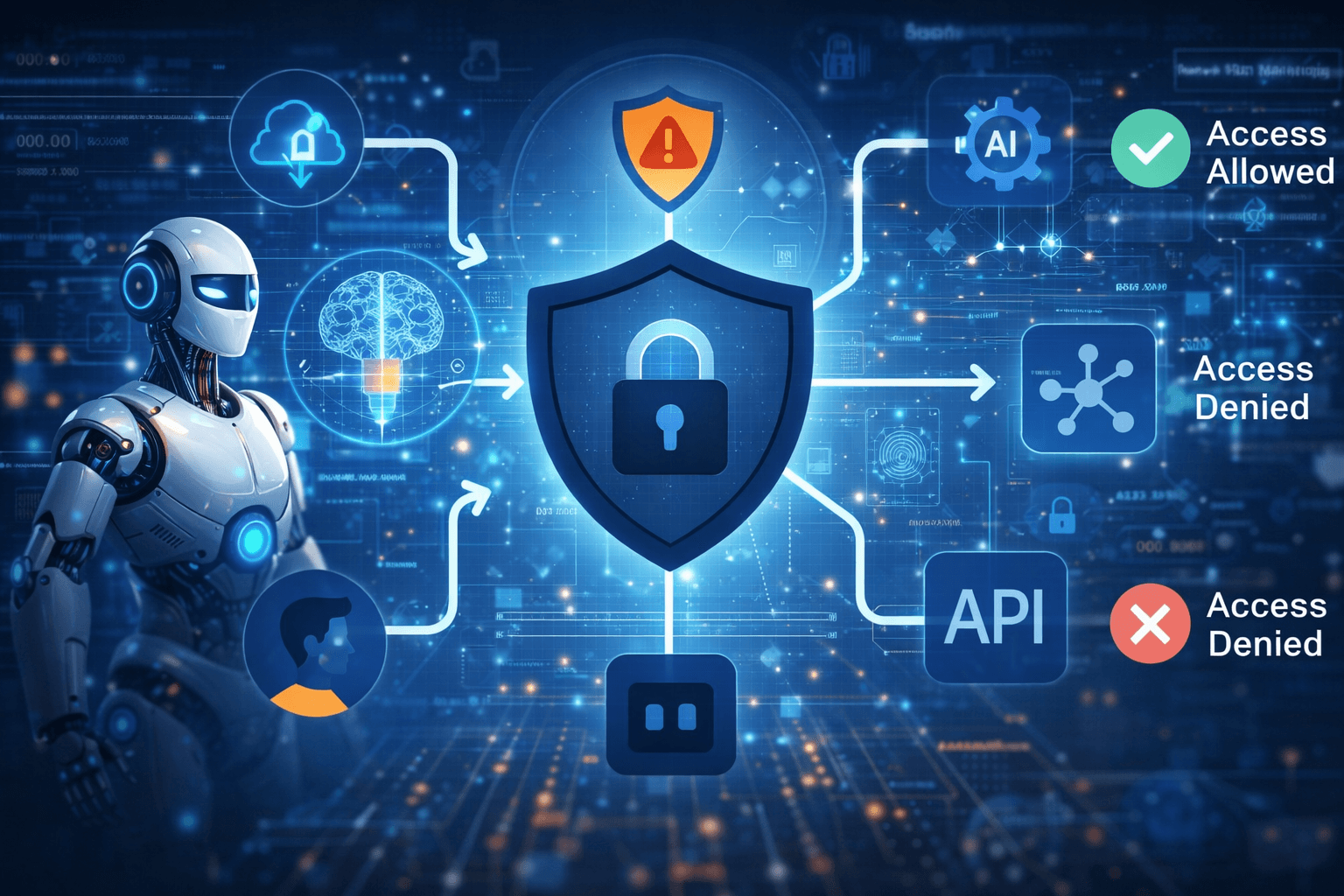
Identity for AI is now generally available with three components that together establish agent identity, enforce delegated authority at runtime, and detect agentic activity:
- • Agent IAM Core — enables enterprises to onboard, manage, authenticate, and authorise AI agents as a distinct, first-class identity type. Access is mapped according to delegated entitlements and policy rules, with least-privilege enforcement for all non-human identities
- • Agent Gateway — the control layer between agents and enterprise services. Standardises how agents interact with systems, applies fine-grained authorisation at the moment of action, and centralises monitoring and audit trails for all agent activity
- • Agent Detection — surfaces and identifies agentic activity across the environment, providing continuous visibility into what agents are doing, where they are operating, and whether their behaviour deviates from authorised patterns
Together, these components extend Ping's enterprise trust architecture into the agentic era — unifying access and governance across human and non-human identities under a single architectural model with centrally enforced policy, full auditability, and accountability at every decision point.
Ecosystem Voices: Deloitte and Cloudflare on Agent Identity
"Agent autonomy is only as safe as the identity and access controls behind it. AI agents should be treated like first-class digital identities: authenticate them, authorise what they can do, and audit what they touch to close governance gaps across the identity lifecycle."
— Chad Veldhuizen, Alliance Leader for Ping Identity and Managing Director, Deloitte & Touche LLP
"AI agents introduce a new class of risk. It's not just about access — it's about having the security controls and oversight in place to understand what those agents do once they're deployed. A holistic view of agent activity and strong guardrails to enforce least privilege and protect sensitive data is critical in the AI era."
— Kyle Krum, Senior Director of Product Management, Cloudflare
Availability and What's Next
Identity for AI is available now and will be generally available globally by March 31, 2026. Future enhancements will expand authorisation and governance capabilities — helping enterprises manage agent and MCP access at scale while deepening agent visibility and lifecycle controls. Ping Identity is hosting a webinar, Identity for AI: Enabling and Securing AI Agents at Scale, on April 7, 2026, for organisations looking to explore implementation. Learn more at pingidentity.com.
Key Takeaways
- • Ping Identity has launched Identity for AI — a generally available solution that controls what AI agents do at runtime, not just whether they can log in.
- • The solution has three core components: Agent IAM Core (onboarding and least-privilege enforcement), Agent Gateway (runtime control and audit), and Agent Detection (continuous visibility into agent behaviour).
- • The approach is built on explicit delegation — not impersonation of human credentials — ensuring humans remain accountable while agents operate with scoped, enforced permissions.
- • Human and non-human identities are unified under a single enterprise trust architecture — with centralised policy enforcement, full auditability, and MCP access management on the roadmap.
- • Identity for AI is globally available by March 31, 2026 — with an enabling webinar on April 7, 2026. Partner ecosystem validation comes from Deloitte and Cloudflare.