
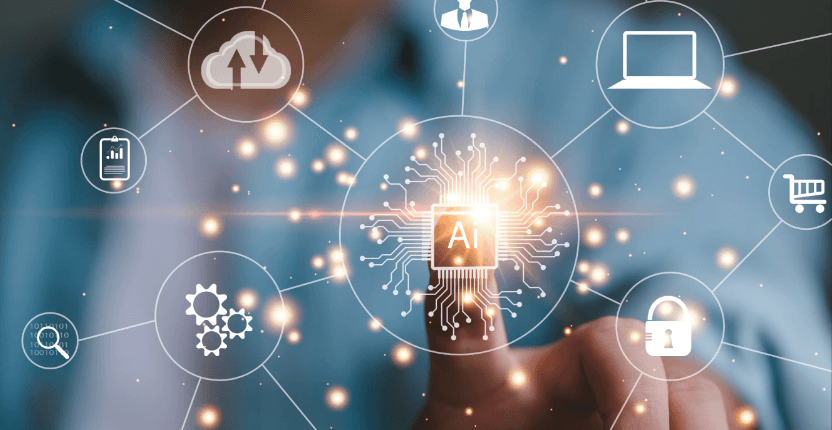
As artificial intelligence continues to influence global technological development, Taiwan is focusing on turning AI from concept into practical application. The recent “AI Everyday: Seeing the Next Step for Taiwan’s Industry” forum, hosted by the National Development Council, highlighted how Taiwan’s industries are shifting from discussing AI’s potential to implementing it in meaningful, real-world solutions.
Richard Lee, CEO of the Asia Silicon Valley Development Agency (ASVDA) Executive Center, emphasized that AI should not be viewed as a standalone industry, but rather as a powerful enabling force. With nearly 300 smart application cases already in use, AI is increasingly integrated across semiconductors, sensing devices, networking, data platforms, and commercial applications. Taiwan’s “AI New Ten Major Construction Projects” aim to support transformation across all industries, ensuring widespread benefit rather than isolated growth.
Three Core Pillars of AI Application
Professor Yun Nung Chen of National Taiwan University outlined a clear model of AI capabilities:
- Perception: Giving machines the ability to sense and interpret information, such as medical imaging or face recognition.
- Generation: Enabling AI to create content, from customized marketing messages to interactive game characters.
- Inference: Predicting outcomes, from consumer behavior to new drug discovery.
Professor Chen emphasized that in this collaborative era, humans act as supervisors—guiding, reviewing, and refining AI output. She noted, “The future is not about AI replacing humans, but about people who use AI replacing those who do not.”
Innovating for Defense and Manufacturing Independence
Monica Lee, Co-founder of Aiseed, shared how her team developed indigenous defense drones capable of handling real-world challenges such as GPS interference. She reinforced the importance of Taiwan moving beyond OEM and ODM roles to strengthen independent research and innovation within global supply chains.
AI Supporting Smart Care in Aging Societies
Addressing workforce challenges in eldercare, Humetrics CEO Hugo Lin described how their sensing and AI alert system supports caregivers by identifying risks like falls, abnormal sleep patterns, or irregular vital signs. Lin noted that caregivers need actionable insights—not endless raw data—demonstrating AI’s role as a decision-support tool rather than just a data generator.
Making 3D Technology Accessible in Daily Life
Optiqb CEO Jye Lin highlighted how traditional 3D technology struggled due to costly production and limited content. Their solution—a screen protector paired with an app—uses AI to convert 2D content into glasses-free 3D directly on mobile devices, bringing immersive viewing into everyday use.
A Future Where AI Becomes Everyday Infrastructure
Across defense systems, healthcare, entertainment, manufacturing, and education, the shared message from the forum was clear: AI’s value lies in solving real-world challenges. The ultimate vision is for AI to become seamlessly integrated—present everywhere and used daily across industries.
Explore Itech360hub.com for the latest news and insights on AI, IoT, cybersecurity, and emerging technology trends.