
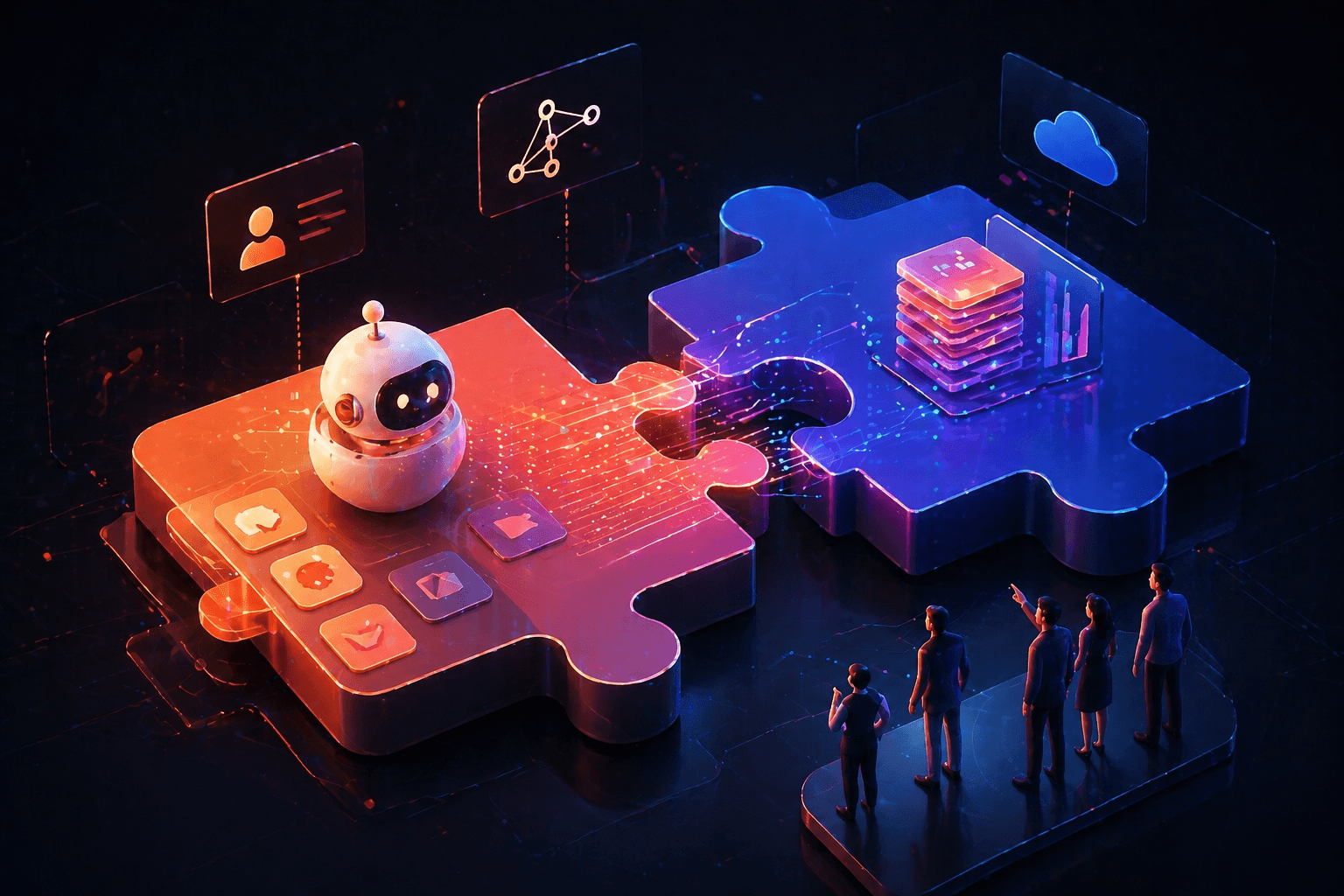
UiPath and Databricks Partner to Close the Gap Between Data Intelligence and Agentic Automation — Delivering Governed AI Workflows at Enterprise Scale
AI / Machine Learning | 4 min read
UiPath (NYSE: PATH; a leader in agentic business orchestration and automation; trusted by more than 10,700 organisations worldwide; built for the modern enterprise and the world's most regulated industries), has announced it is a validated technology partner of Databricks — the Data and AI company. The partnership introduces tailored integrations connecting the UiPath Platform™ with the Databricks platform, enabling enterprises to move from data insights to automated action within business processes. By combining trusted data, AI-driven reasoning, and automation, organisations can improve decision-making speed, increase operational efficiency, and scale AI adoption across the enterprise. Organisations have long struggled to translate data insights into measurable business outcomes due to fragmented systems and disconnected workflows. UiPath addresses this by embedding Databricks-powered intelligence directly into automated processes — allowing enterprises to act on real-time data across systems, teams, and functions. The integration is available today, with additional enhancements to agentic orchestration and AI capabilities planned throughout the year.
"Databricks brings proven data intelligence infrastructure. We bring proven process orchestration. Together, we're delivering governed workflows where agents access enterprise data with context and control, using a combination of UiPath Maestro — orchestrating agents, robots, and people — and Databricks enterprise intelligence at the scale needed for measurable business outcomes."
— Vikram Kakumani, Deputy Chief Technology Officer, UiPath
Three Integration Capabilities — Real-Time Data, Maestro Orchestration, and Enterprise Governance
The partnership delivers three integrated capabilities. First, real-time access to trusted enterprise data: UiPath agents and automations can securely access and query unified data from Databricks — including structured and unstructured sources such as databases, documents, and logs — ensuring that automated workflows are grounded in accurate, up-to-date information rather than stale or siloed datasets. Second, orchestration of Databricks agents with UiPath Maestro™: by serving as a unified control plane, UiPath Maestro™ seamlessly coordinates AI agents, robots, systems, documents, and people across complex, cross-functional workflows — enabling organisations to operationalise AI at scale and transform fragmented intelligence into autonomous, outcome-driven execution. Third, enterprise-grade governance and transparency: UiPath delivers built-in governance, auditability, and control across automated workflows and into the Databricks platform — giving organisations visibility into how data, AI agents, and automation interact, supporting compliance and responsible AI adoption end-to-end. This governed approach addresses a key barrier: Gartner has identified the pipeline-to-production bottleneck as a challenge for the majority of enterprises, and the UiPath-Databricks integration directly reduces the need for custom glue code between data and automation layers.
UiPath's Expanding April 2026 Partnership Momentum
The Databricks partnership is part of a broader pattern of strategic integrations UiPath has announced in April 2026. On the same day, UiPath also announced it is accelerating a new agentic-led software testing capability through Deloitte's ASCEND Delivery Platform. Earlier in the month, UiPath brought its AI Document Processing Solution to the Google Cloud Marketplace with Gemini-powered automation, and announced AI-powered orchestration and CX automation on Salesforce AgentExchange. Together, these integrations reflect UiPath's strategy of positioning its Maestro orchestration layer as the enterprise control plane across the AI ecosystem — connecting data (Databricks), cloud (Google Cloud), CRM (Salesforce), and professional services delivery (Deloitte ASCEND) into a single governed automation fabric. UiPath integrates automation, orchestration, AI, and testing into governed, scalable workflows — unlocking innovation at the speed of business while delivering the controls and compliance that enterprise leaders demand.
Key Takeaways
- • UiPath (NYSE: PATH; leader in agentic business orchestration and automation; 10,700+ organisations worldwide; Deputy CTO: Vikram Kakumani) has announced it is a validated technology partner of Databricks (the Data and AI company) — announced 27 April 2026. Integrations connect UiPath Platform™ with Databricks platform. Available today; additional agentic orchestration and AI enhancements planned throughout the year. Addresses the enterprise challenge of translating data insights into measurable business outcomes across fragmented systems and disconnected workflows.
- • Three integrated capabilities: (1) Real-time access to trusted enterprise data — UiPath agents and automations securely access and query unified Databricks data (structured and unstructured: databases/documents/logs); automated workflows grounded in accurate up-to-date information; eliminates "data drift" where bots act on stale data. (2) UiPath Maestro™ orchestration — unified control plane coordinating AI agents/robots/systems/documents/people across complex cross-functional workflows; operationalises AI at scale; transforms fragmented intelligence into autonomous outcome-driven execution. (3) Enterprise-grade governance and transparency — built-in governance/auditability/control across automated workflows and into Databricks; visibility into how data+AI agents+automation interact; supports compliance and responsible AI adoption end-to-end.
- • The strategic gap the partnership closes: enterprises have long run data intelligence and process automation as separate stacks — data teams producing insights in Databricks, automation teams executing processes in UiPath, with significant manual effort required to connect them. The integration embeds Databricks-powered intelligence directly into UiPath automated processes — closing the insight-to-action gap at the automation layer without custom integration development. Vikram Kakumani's framing is precise: Databricks brings proven data intelligence infrastructure; UiPath brings proven process orchestration; together they deliver governed workflows where agents access enterprise data with context and control.
- • UiPath April 2026 partnership momentum: (1) Databricks — validated technology partner/real-time data + Maestro orchestration + enterprise governance (27 April 2026). (2) Deloitte ASCEND — agentic-led software testing capability (27 April 2026). (3) Google Cloud Marketplace — AI Document Processing with Gemini-powered automation (22 April 2026). (4) Salesforce AgentExchange — AI-powered orchestration and CX automation (16 April 2026). Together these position UiPath Maestro as the enterprise AI control plane connecting data/cloud/CRM/professional services delivery.
- • Strategic significance — the convergence of data intelligence and agentic automation: the UiPath-Databricks partnership represents the convergence of two previously distinct enterprise AI capabilities — data lakehouse intelligence (Databricks) and agentic process automation (UiPath) — into a single governed execution layer. This convergence is the foundational requirement for enterprise AI that goes beyond dashboards and pilots into autonomous, outcome-driven operation at scale. Organisations that have invested heavily in both Databricks for data and UiPath for automation now have a validated, governed pathway to connect them — without rebuilding either platform. For regulated industries where governance and auditability are non-negotiable requirements for AI adoption, the end-to-end audit trail and policy enforcement layer makes this integration one of the most immediately deployable enterprise AI architectures available.